Steam cleaners have become one of the most popular home cleaning tools on the market, and it’s easy to see why. They use heat and water vapor to lift dirt, kill bacteria, and refresh surfaces without relying heavily on chemical cleaners. For carpets and upholstery especially, a steam cleaner used correctly can do a genuinely impressive job.
The problem is that “used correctly” is doing a lot of heavy lifting in that sentence. Steam cleaners are powerful tools, and like most powerful tools, they’re easy to misuse. As professional carpet cleaners serving the DFW area, we’ve seen the results of steam cleaning done right and steam cleaning done wrong.
This guide covers everything a first-time user needs to know: how steam cleaners work, how to prepare your surfaces, step-by-step instructions for carpet and upholstery, the mistakes that cause the most damage, and the honest limits of what a steam cleaner can accomplish on its own.
How Does a Steam Cleaner Work?
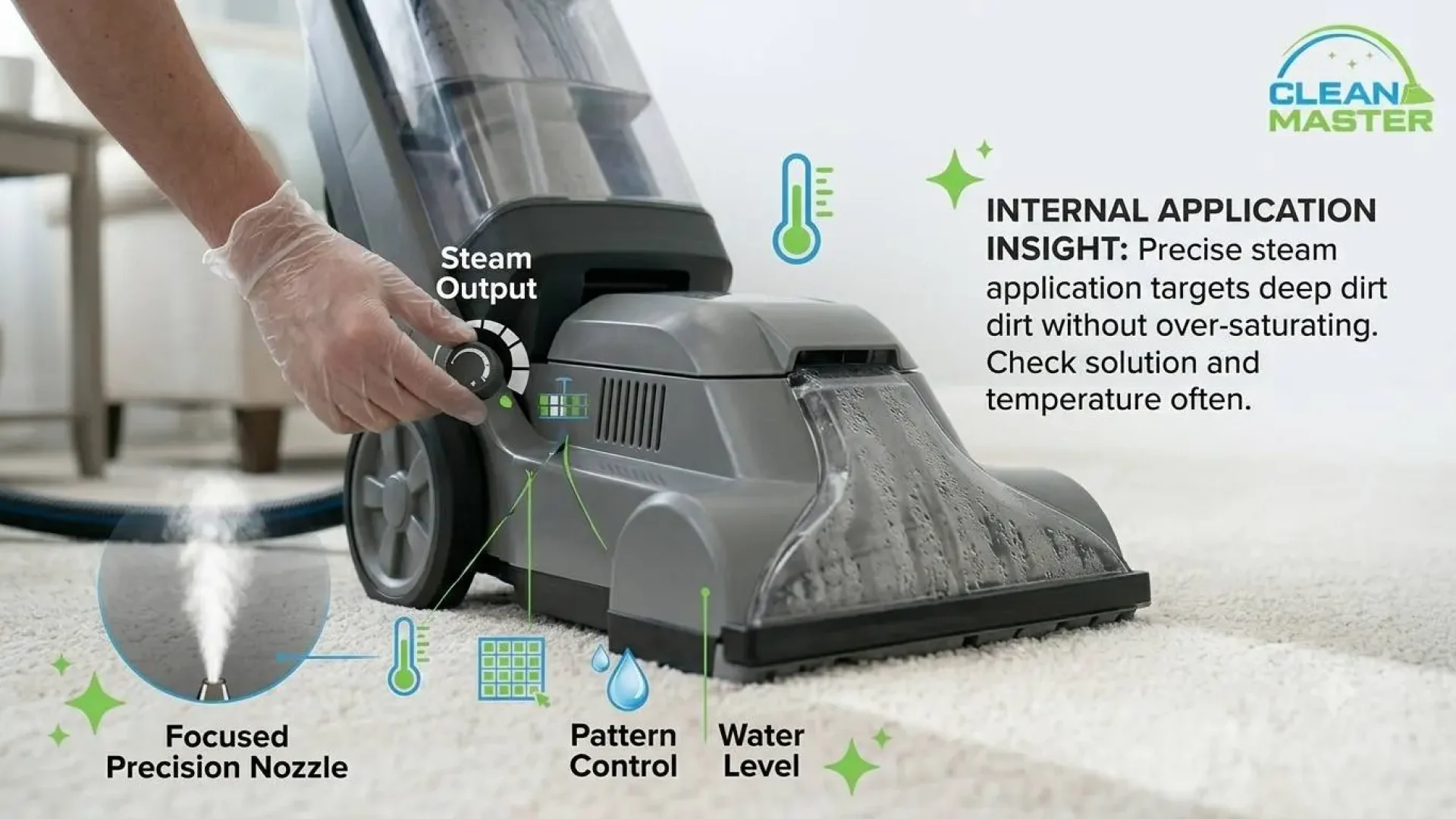
Before you start, it helps to understand what you’re actually doing. A steam cleaner heats water to a high temperature, typically between 200°F and 250°F, and releases it as pressurized vapor through an attachment head. That vapor penetrates surface fibers, loosening dirt, dissolving grease, and killing dust mites, bacteria, and other microorganisms on contact.
Unlike a carpet cleaner or shampooer, a steam cleaner uses significantly less water, which means faster drying times when used correctly. It also relies on heat rather than chemicals to do most of the cleaning work, making it a genuinely good option for households that prefer to minimize chemical use.
What it is not is a deep extractor. A steam cleaner agitates and loosens, it doesn’t pull. That distinction matters, and we’ll come back to it.
What You’ll Need Before You Start
Your steam cleaner fully assembled and filled with distilled water, appropriate attachments including a floor head for carpet and an upholstery brush for furniture, a vacuum cleaner, clean microfiber cloths, and distilled or demineralized water since tap water causes mineral buildup in steam cleaners over time.
Step-by-Step: How to Use a Steam Cleaner on Carpet
Step 1: Vacuum Thoroughly First
This is the step most first-time users skip, and it’s the one that makes the biggest difference to your results. Steam cleaning is not a substitute for vacuuming. It’s what comes after.
Vacuuming removes loose surface debris, hair, dust, crumbs, and dry dirt, that would otherwise turn into muddy residue when hit with steam. If you steam first, you’re essentially pressing dry debris deeper into the fibers with heat and moisture. Always vacuum before you steam, and be thorough about it. Go over the area at least twice, in different directions. Read our guide on whether you should vacuum before carpet cleaning for more on why this step matters.
Step 2: Check Your Carpet Type
Not all carpets are steam cleaner-friendly. Before you begin, identify what your carpet is made of.
Steam cleaning is safe for most synthetic carpets. Nylon, polyester, and olefin handle heat well. However, natural fiber carpets including wool, sisal, jute, and cotton are sensitive to both heat and moisture. High-temperature steam can shrink wool fibers, cause natural materials to warp, or strip protective coatings from delicate rugs. If your carpet is natural fiber, check the manufacturer’s care instructions before proceeding. When in doubt, don’t.
Step 3: Fill the Tank with Distilled Water
Fill your steam cleaner’s water tank with distilled or demineralized water, not tap water. Tap water contains minerals that accumulate inside the machine over time, reducing performance and shortening the cleaner’s lifespan. Most machines indicate the maximum fill line clearly, don’t exceed it.
Step 4: Allow the Machine to Heat Up Fully
Plug in your steam cleaner and allow it to reach full operating temperature before you begin. Most machines take 30 seconds to a few minutes to heat up. Starting before the machine is fully ready produces inconsistent steam output and less effective cleaning. Wait for the indicator light or the steady steam flow that signals it’s ready.
Step 5: Attach the Floor Head and Begin Cleaning
Attach the carpet or floor head to your steam cleaner. Starting at the far corner of the room, away from the door, work in slow, overlapping passes across the carpet. Move in the direction of the carpet pile, not against it.
The most important technique note here is to go slowly, far more slowly than feels natural. Each pass should take approximately 3 to 5 seconds per foot of carpet. The goal is to allow the steam to fully penetrate the fiber and do its work before you move on. Moving too fast means the steam barely touches the surface. You’ll cover more ground but clean less effectively.
Overlap each pass by about half the width of your cleaning head to ensure even coverage and avoid streaking.
Step 6: Allow the Carpet to Dry Completely
Once you’ve finished steaming, keep foot traffic off the carpet until it’s fully dry. Steam cleaning uses far less moisture than traditional carpet shampooing, so drying times are significantly shorter, typically 1 to 3 hours under normal conditions. In humid DFW summers, or in rooms with poor ventilation, drying can take longer.
Open windows, run fans, and if humidity is high, use a dehumidifier to speed up the process. For a full breakdown of drying times, see our guide on how long carpet takes to dry after steam cleaning. Don’t walk on the carpet in shoes or bare feet while it’s still damp, you’ll re-soil the fibers you just cleaned.
Step-by-Step: How to Use a Steam Cleaner on Upholstery
Step 1: Check the Upholstery Care Label
Every upholstered piece of furniture has a care label, usually found underneath a cushion or on the frame beneath the fabric. These labels use a simple code. W means safe to clean with water-based methods and steam is generally fine. S means solvent-based cleaning only and you should not steam. W/S means either method is acceptable. X means vacuum only with no water or steam of any kind.
If your furniture is labeled S or X, put the steam cleaner away. Using steam on these fabrics can cause permanent watermarks, shrinkage, or color bleeding.
Step 2: Vacuum the Upholstery First
Just as with carpet, vacuum the upholstery thoroughly before steaming. Use your vacuum’s upholstery attachment to remove loose debris from cushions, crevices, and along seams. This step is especially important on sofas and chairs where crumbs, pet hair, and dust accumulate in pockets that steam alone can’t dislodge.
Step 3: Test a Hidden Area
Before steaming the main visible surfaces, test your steam cleaner on a hidden section, the back of a cushion, the underside of an armrest, or a panel facing the wall. Apply steam briefly and allow it to dry fully. Check for color change, watermarks, shrinkage, or texture changes. If anything looks off, stop and consult a professional.
Step 4: Attach the Upholstery Brush and Reduce Steam Output
Switch to the upholstery brush attachment. If your steam cleaner has adjustable steam settings, reduce to a lower output for upholstery, less steam than you’d use on carpet. Upholstery fabrics are generally thinner and less absorbent than carpet, which means they saturate more easily.
Step 5: Work in Small Sections with a Microfiber Cloth
Rather than steaming directly onto the fabric, hold a clean microfiber cloth over the attachment head. The cloth buffers the direct steam contact, distributes it more evenly, and absorbs the loosened dirt as you go. Work in small sections, no larger than about one square foot at a time, using light, even strokes.
As the microfiber cloth becomes soiled, switch to a clean one. Don’t continue buffering with a dirty cloth, you’ll transfer dirt back onto the fabric.
Step 6: Allow Upholstery to Dry Fully Before Use
Keep the furniture out of use until it’s completely dry, typically 1 to 2 hours. Prop cushions upright if possible to allow air circulation on both sides, and run a fan nearby to accelerate drying.
Common Steam Cleaning Mistakes to Avoid
Not Vacuuming First
We’ve already covered this, but it bears repeating because it’s the most common mistake we see. Steam does not remove dry debris. It just wets it. Vacuum first, every time.
Over-Wetting Carpet or Upholstery
Moving too slowly or making too many passes over the same area introduces more moisture than the fibers can handle. Over-wetted carpet takes far longer to dry and risks mildew growth in the backing or padding beneath. Read our guide on whether carpet cleaning can cause mold to understand how to avoid this. Over-wetted upholstery can cause fabric to stretch, warp, or develop permanent watermarks. One slow, steady pass is almost always enough.
Using Steam on Heat-Sensitive or Moisture-Sensitive Surfaces
Wool carpets, silk upholstery, leather, unsealed hardwood, and laminate flooring are all vulnerable to heat and moisture damage. Always check care labels and manufacturer guidance before steaming any surface you’re unsure about. When in doubt, don’t. The cost of a professional consultation is far lower than the cost of replacing a damaged rug or sofa.
Moving Too Fast
A steam cleaner operated at walking pace is little more than a warm mop. The cleaning power of steam comes from dwell time, the time the heat and vapor spend in contact with the surface. Slow, deliberate passes are what produce real results. If you’re covering a room in under ten minutes, you’re going too fast.
What a Steam Cleaner Can’t Do
A steam cleaner is a genuinely useful maintenance tool, but it has firm limits that are worth understanding before you rely on it too heavily.
It doesn’t extract. Steam loosens and agitates dirt, but it doesn’t remove it from the carpet. Some of that loosened material gets absorbed by the surface fibers as the steam dries, which is why steaming heavily soiled carpet can sometimes look worse after the first pass. A professional carpet cleaner uses hot water extraction equipment with powerful suction to actually pull contaminants out of the carpet, not just redistribute them.
It can’t treat deep pet urine contamination. Surface odor may improve temporarily after steaming, but uric acid crystals bonded to carpet backing and padding require enzyme treatment to break down. Steaming pet-soiled areas without enzyme pre-treatment can actually heat-set the odor, making it harder to remove later. Read our guide on how to use enzyme cleaner on carpet before tackling pet odor.
It can’t replace periodic professional deep cleaning. Steam cleaning is excellent for maintenance between professional visits, keeping surface dirt manageable, refreshing lightly soiled areas, and extending the time between deep cleans. But every 12 to 18 months, carpets need a professional hot water extraction clean to remove the embedded soil, allergens, and organic material that steam simply can’t reach. See our guide on how often you should get your carpet cleaned to stay on the right schedule.
As a carpet cleaning company serving the DFW area, we work with a lot of homeowners who steam clean regularly and still bring us in seasonally. That combination, consistent home maintenance plus professional deep cleaning, is the approach that keeps carpets looking their best and lasting longest.
Frequently Asked Questions
How often should I steam clean my carpet?
For most households, once every 1 to 3 months is a reasonable frequency for maintenance steam cleaning. High-traffic areas or homes with pets and children may benefit from more frequent sessions. This is separate from professional deep cleaning, which should happen at least once a year.
Can I add cleaning solution to my steam cleaner?
Most steam cleaner manufacturers advise against adding anything other than distilled water to the tank. Cleaning solutions can damage internal components, void your warranty, and leave residue in the machine. If you want to pre-treat a stain, apply the solution directly to the carpet, allow it to dwell, blot it up, then steam the area. Don’t add it to the machine.
Why does my carpet look worse after steam cleaning?
This usually means one of three things: you didn’t vacuum first, you moved too fast for the steam to be effective, or the carpet was more heavily soiled than it appeared. Deeply embedded soil can be brought to the surface by steam, making it more visible before it fully clears. If this happens, allow the carpet to dry completely, vacuum again, and assess. If it still looks poor, it’s likely time for a professional extraction clean.
Is steam cleaning safe for all upholstery colors?
Not necessarily. Darker or more saturated fabric colors are more prone to bleeding or fading when exposed to heat and moisture. Always test on a hidden area first, regardless of color.
The Bottom Line: Steam Clean Smart, and Know When to Call the Pros
A steam cleaner used correctly is one of the best maintenance tools a homeowner can own. It’s chemical-light, genuinely effective on surface-level dirt and odors, and when used on the right surfaces with the right technique, it extends the life and appearance of your carpets and upholstery between professional visits.
The key words are right surfaces, right technique, right expectations. Vacuum first. Move slowly. Don’t over-wet. Check your care labels. And understand that steam cleaning is maintenance, not a substitute for the deep extraction clean that your carpets need at least once a year.
When that time comes, our DFW carpet cleaning team is here with the equipment, solutions, and expertise to get beneath the surface and deliver results a steam cleaner simply can’t match. Book a professional carpet clean with our DFW team today and give your carpets the deep clean they deserve.