
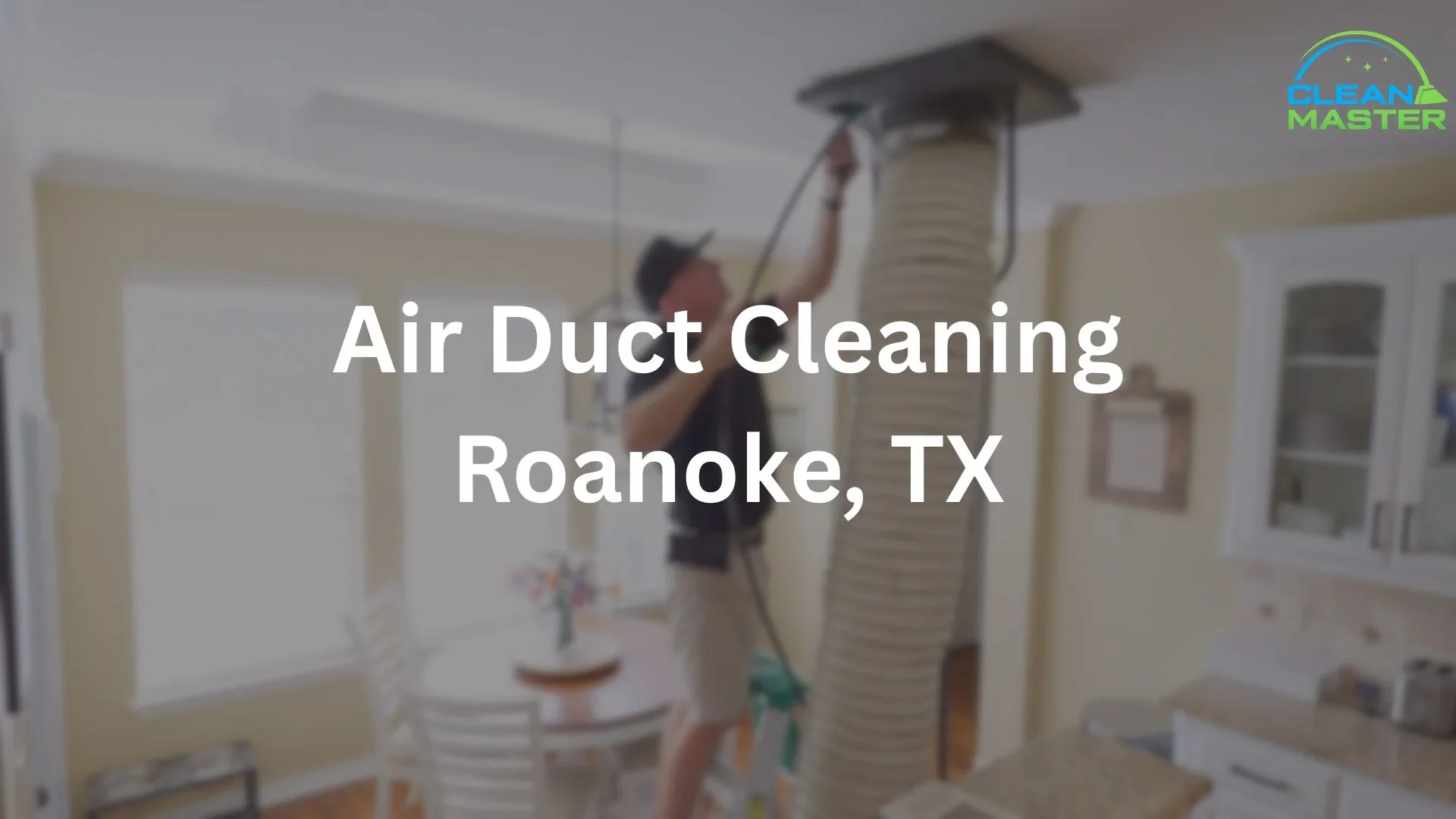
Roanoke has managed something a lot of DFW towns can’t: it’s held onto its small-town core while growing quickly around it. New residential development keeps filling in around a town center that’s stayed genuinely walkable and established. That mix means air duct problems in Roanoke split fairly cleanly along one line, how old the house is.
At Clean Master Carpet Cleaning, we’ve spent over 26 years cleaning air ducts in Roanoke and across the greater DFW metro. We’re NADCA and IICRC certified. And what we consistently find is that the newer half of Roanoke’s homes and the older half have almost nothing in common when it comes to what’s sitting inside their ductwork.
Newer Homes: Construction Debris Left Behind
Roanoke’s growing residential development follows a pattern that’s familiar across this part of the metro. Ductwork gets installed early in the building process, then stays exposed while drywall goes up, gets sanded, and gets sanded again, often with the HVAC system running during finish-out to keep the crew comfortable. That pulls drywall dust, sawdust, and insulation fibers directly into the duct runs before a family ever sees the finished house.
At final walkthrough, everything looks spotless. Builders almost never clean the ducts, it’s not a standard part of handoff, and it’s the one part of the house that’s completely out of sight.
Established Homes: Years Nobody’s Checked
Roanoke’s older, established homes carry a different issue entirely: accumulated buildup that’s had a long time to settle in. Ordinary household dust, pet dander, and fabric fibers build up gradually inside duct systems that may have never been professionally cleaned. It’s not dramatic, and it doesn’t show up all at once, it’s the kind of slow drift that’s easy to overlook until an allergy season, an energy bill, or a musty smell finally makes someone stop and check.
What Roanoke Homeowners Usually Notice First
Across both types of homes, the complaints tend to follow a similar shape:
- Dust that resettles on furniture shortly after cleaning
- Visible dust near supply vents when the system starts
- A musty or chalky smell at startup
- Allergy symptoms, coughing, or sinus congestion tied to being home
- Energy bills that don’t match the age or rating of the system
- Uneven airflow between rooms
DIY vs. Professional Duct Cleaning: A Side-by-Side Comparison
| Factor | DIY Cleaning | Professional Cleaning |
| Cost | Low, vacuum attachments, filters, tools you may already own | Custom quote based on system size, age, and condition |
| Time | 2 to 4 hours for vent covers and registers | Typically 2 to 4 hours on-site, with full-system access |
| Equipment | Household vacuum, brushes, disposable filters | Negative air pressure systems, rotary brushes, HEPA-filtered vacuums, video inspection cameras |
| Depth of cleaning | Reaches vent covers and a short distance into the duct | Cleans the entire system, supply and return runs, plenum, coils, and blower components |
| Best for new construction | Not recommended right after move-in | Construction debris, drywall dust, insulation fibers left from the build |
| Best for older homes | Light dust on vent covers | Years of accumulated buildup, first-ever cleaning |
| Risk | Can push dust deeper into ducts or tear flex duct if done incorrectly | Low risk when performed by certified technicians |
| Result | Surface-level improvement, often needs repeating | Measurable improvement in airflow and indoor air quality system-wide |
The short version: DIY reaches what’s visible. What’s actually driving the problem, fresh construction debris or years of buildup, usually sits deeper than a household vacuum can reach.
When DIY Duct Cleaning Is Safe in Roanoke
You can likely handle this yourself if all of these are true:
- Your home is settled, well past construction, no recent renovation, no known history of duct problems
- You’re only cleaning visible vent covers and registers, not reaching into the ductwork
- There’s no visible mold, no musty odor, and no history of water intrusion
- No one in the household has new or worsening allergy or respiratory symptoms
- Airflow feels consistent from room to room
- You’re comfortable accessing vents without disturbing insulation or damaging flex duct
How to do it well: turn the system off at the thermostat and the breaker before you start. Unscrew the vent covers and return grilles and wash them in the sink with dish soap, that’s where most visible dust lives. Vacuum as far into the opening as the hose comfortably reaches using a soft brush attachment. Never force anything rigid into flex duct, the inner liner tears easily, and a torn liner is a much bigger problem than dust. Change the filter on a real schedule, in an older home an overdue filter is often the single biggest issue. In a newer home, check the filter monthly for the first year since builder-grade filters fill up faster than most people expect.
That’s genuine maintenance for a home with no specific problems. We’d rather tell you that than sell you something you don’t need.
When to Call a Professional
It’s time to bring in a certified technician if any one of these applies:
- You’ve moved into a new construction home in Roanoke, builders rarely clean ducts before handoff, and construction debris is almost always present
- You live in an older Roanoke home and don’t know when, or if, the ducts were ever cleaned
- You see dust blowing visibly out of vents when the system kicks on
- You’ve finished a renovation involving drywall, demo, sanding, or flooring
- There’s visible mold, a musty smell, or you’ve had recent water intrusion
- There’s evidence of rodents, insects, or nesting material in the system
- Household members have unexplained allergy flare-ups, coughing, or sinus issues, especially if symptoms improve when they’re away from home
- Your energy bills have crept up without an obvious cause
- It’s been more than 3 to 5 years since your last professional cleaning, or you don’t know when it last happened
Real Case Study: A New Roanoke Home and Dust That Wouldn’t Quit
The situation: A family in one of Roanoke’s newer residential developments called us a few months after moving in. The house looked immaculate at closing, but they’d started noticing dust resettling on furniture within a day or two of cleaning, no matter how thoroughly they wiped everything down. It felt disproportionate for a house that new, and it was starting to wear on them.
What we found: During inspection, we found the pattern we see constantly in newer Roanoke builds: construction debris packed into the duct system. A fine, chalky layer of drywall dust mixed with sawdust and insulation fibers coated the plenum and the first stretch of the supply trunk. The blower wheel carried a real buildup of the same material, compacted into the blade cups, exactly what happens when a blower runs while fine particulate is still in the airstream. The filter in place was the standard builder-grade panel, and it had clearly been overwhelmed for some time.
What we did: We performed a full inspection and complete cleaning of the entire system using negative air pressure equipment, pulling debris out of the home rather than pushing it around. That covered the supply and return runs, the plenum, the blower components, and the coil. We finished with a better filter and a clear replacement schedule for the family going forward.
The result: The family reported the resettling dust dropped off noticeably within the first couple of weeks, and the house generally felt cleaner between their regular cleaning days.
The honest part: This is one of the most common calls we get from Roanoke’s newer neighborhoods, and it follows a predictable shape almost every time: a spotless-looking new home, dust that keeps coming back faster than it should, and a duct system carrying construction debris from the day the family moved in. “New” and “clean” simply aren’t the same thing when it comes to ductwork.
Frequently Asked Questions
Do new construction homes in Roanoke really need duct cleaning?
Yes, more often than not. Ductwork is installed early in the building process and stays exposed while drywall, flooring, and trim work continue around it. Builders almost never clean ducts before handoff, so construction dust is routinely present before a homeowner ever moves in, and Roanoke’s growing residential development means this applies to a steady stream of newer homes in town.
Do older homes in Roanoke need duct cleaning too?
Often, yes, for a different reason. Established homes accumulate years of ordinary household dust and debris, especially if the ducts have never been professionally cleaned. It’s a slower, quieter buildup than fresh construction dust, but it adds up to the same result: restricted airflow and reduced indoor air quality.
How often should air ducts be cleaned in the Roanoke area?
For most homes, every 3 to 5 years is a reasonable baseline. Move that up if you’re in new construction, you’ve recently renovated, or you don’t know when your ducts were last cleaned.
Can mold grow in air ducts in North Texas?
It can, where moisture and a food source meet, most often near the coil and the first stretch of supply duct. If you see visible mold or smell mustiness, don’t spray bleach into the duct, that spreads spores and doesn’t address the underlying moisture source.
Is air duct cleaning worth it?
Sometimes, and that depends on your home. It’s worth it for new construction, years of accumulated buildup in an older home, mold, pests, or unexplained allergy symptoms. It’s not worth it as a routine service on a home with no specific problems. An inspection tells you which one you’re dealing with.
Ready for a Duct Inspection in Roanoke?
Whether you’re in one of Roanoke’s newer developments with leftover construction dust, or an established home that’s never had its ducts touched, Clean Master Carpet Cleaning has spent over 26 years serving Roanoke and the greater DFW metro. We’re NADCA and IICRC certified, and we know the difference between what a new system hides and what an old one hides. Contact us today for a free quote and inspection, we’ll tell you honestly whether your ducts need a full cleaning or whether you’re fine for now.